Showing posts with label science. Show all posts

Friday, July 19, 2013

Precious Stones

I take slow, deliberate steps along the shore of Lake Superior with my head cast down, gaze sweeping methodically across the ground. Thousands of small pebbles are scattered in tiers on the sand, some glistening at the edge of the ebbing waves, others pushed further up the beach by past storms. They create a colorful earth toned mosaic punctuated by bright flecks of mustard, terracotta and slate blue.

My eye is most easily drawn to the layered nuggets of maroon and gray, which glow like hot embers in the shallow water. These rocks known as banded iron formations were created in the region two billion years ago when oxygen first became abundant in the atmosphere. This element combined with dissolved iron in the oceans to form iron oxides. The oxygen was produced by photosynthesizing algae, thus preserving the first breath of plant life in stone and laying the future economic foundation of this entire region.


I spy an oval shaped slip of white rock scored with telltale tubular striations contrasting against the grainy brown sand. It is a piece of fossilized coral from the ancient shallow sea that covered this land 400 million years ago. I imagine a watery world blanketed with coral reefs. Sea lilies sway in the current as the perfectly spiraled shell of an ammonite jets by, squid-like tentacles streaming in its wake. Trilobites scuttle across the sea floor over and around clusters of brachiopod shells. A seagull’s call brings me back to the terrestrial present, but thoughts of geologic time and transformation continue to swirl in my mind.


I am determined to collect a rainbow of rocks. Oranges and blues are mostly igneous rhyolite and basalt deposits from a 1,200 mile long rift through the heart of North America that opened up one billion years ago. It extended from modern day Ontario down to Kansas and branched over into Michigan. A large basin formed at the junction of the northern and eastern arms of the rift, which was ultimately filled with water by retreating glaciers to form Lake Superior just 10,000 years ago. I add them to the metamorphic green epidote and yellow chert already in my pocket.


Red, brown, purple and white sandstones represent deposits from ancient rivers and streams that flowed off the volcanic mountain ranges in the region 500 million years ago. The brown sandstone was particularly prized by architects in the late 1800’s as a building material, referred to as Lake Superior Brownstone, and was used to construct many stoic buildings and residences in the towns that ring the lake. These sandstone formations were also carved and smoothed by wind and waves to form the Apostle Islands.


The individual colors of rock all blend to steely gray as twilight approaches. I sit on the beach listening to the hush of the waves lapping onto shore, holding the accumulation of two billion years in the palm of my hand. Sunset casts its glow as the lights of Washburn begin to twinkle in the distance. I dig my toes down into a confetti of geologic time to feel the lingering warmth of the radiant summer sun still in its grains.


Saturday, May 18, 2013

Liquid and Light

I've been stuck for weeks trying to figure out what to write about for my next blog post. This is not to say that I've done nothing worth writing about - a succession of house guests have inspired numerous adventures in Yosemite Valley, including a hike to the top of Yosemite Falls and two visits to Mirror Lake. But for some reason, each time I pondered how to write about these experiences, I could not capture them in words.

Six weeks overdue on my monthly post, I tried this past week to write about other topics that have been on my mind lately - the one year anniversary of our move to Mariposa, or maybe my desire to see Yosemite Valley from a different perspective by exploring the legends that inspired the Native American names of its iconic landmarks. Each of these essays faltered due to the complex nature of human interpretation. I view my beloved new hometown through my own lens and do not wish to imply this as the truth for anyone else. A similar lesson applies, it turns out, for the history of Native Americans in this area. During my research, I learned that two different tribes claim the valley as their historic home. The park currently interprets one tribe's perspective, while the other feels slighted and fears their ancestors will fade into undocumented history.

I could not begin to untangle the complicated and often subjective truth of this dispute, so I decided to go back to the basics. Yesterday, I closed my eyes and scanned through the much loved photographs I hold in my heart as a reminder to never stop paying attention. Those images which resonated most involved both liquid and light, whose basic properties are taught in most science classrooms, usually as a stepping stone to more advanced theories and discoveries. And yet the delicate and ephemeral truths they reveal remind us of the beauty that can always be found in this world of often painful subjectivity.

What do I know to be true? That I unconsciously hold my breath when I stumble upon a perfect sphere of water clinging precariously to the surface of a petal. I pour over flowers drenched in newly fallen rain for those droplets that capture an inverted version of the world in miniature, the magic of light passing through a curved surface. I marvel at the jewel-like brilliance of resinous sap as it imperceptibly drips down the contours of a pine cone. I believe there are few things in this world more beautiful than dew drops suspended in a net of cobwebs.  


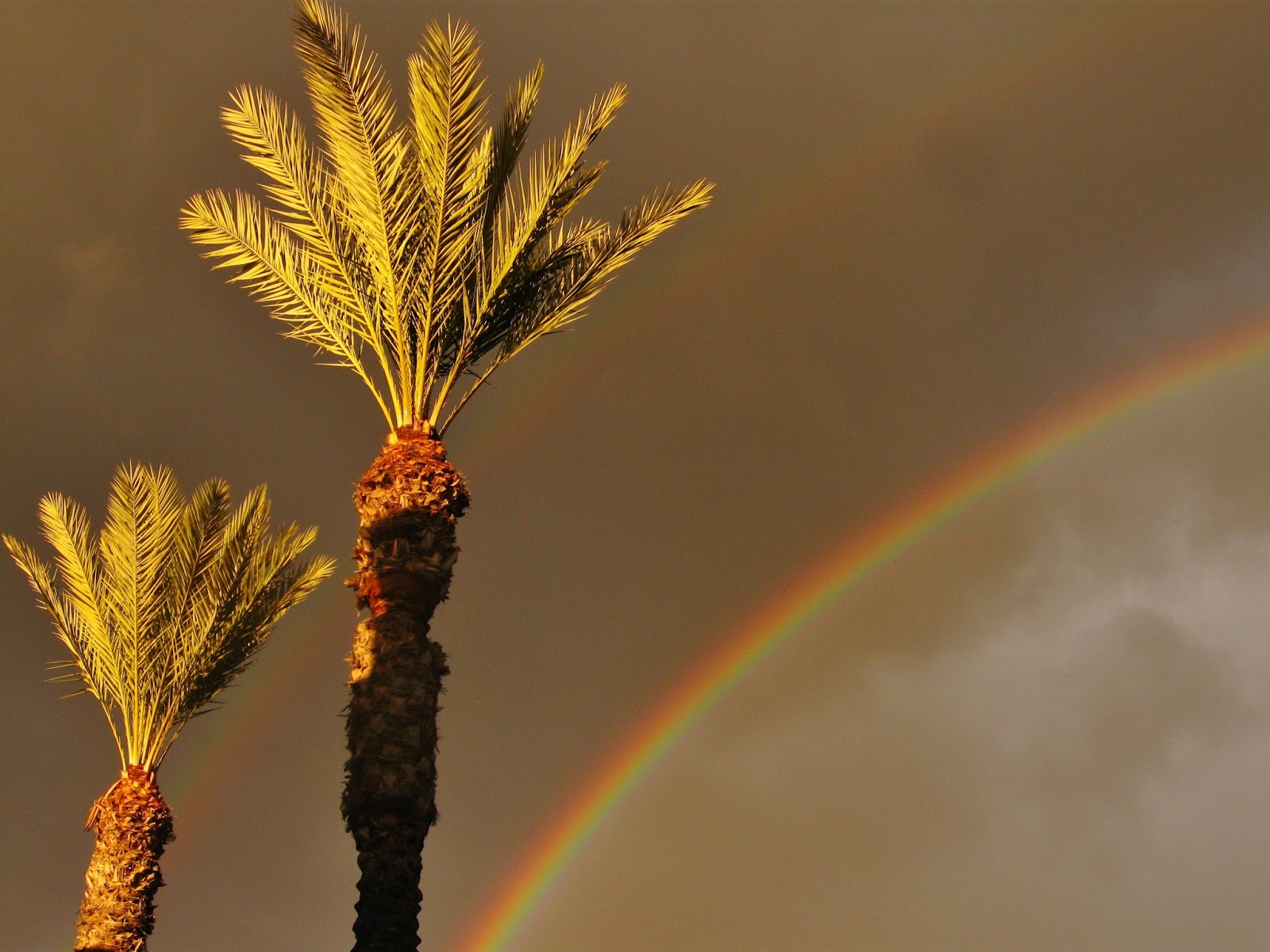
I scan the sky for arcs of color against billowing mounds of dark cumulus after a rainstorm. In the morning and evening I scout out iridescent sun dogs in the crystalline drops of water that form wispy cirrus clouds. This temporary separation of light into its bands of distinct color reminds me that there are yet more wavelengths I don't see. I cannot even fathom what it would be like to see the world from the ultraviolet view of a bee or the infrared glow of a python.


This spring in Yosemite Valley, I experienced the occasional miracle of rounding a bend in the trail on a clear blue day to see a rainbow emerge out of a waterfall's mist. One was so close I could almost reach out and touch it, but it always stayed one step ahead of me. I walked among the tall trees through this spray of moisture with the scent of bay laurel and incense cedar hanging in the cool morning air. Thousands of years of memory may be lost or misinterpreted in this place, but liquid and light always reveal their truth.


Sunday, December 16, 2012

Albuquerque from Above

We arrive at the balloon launch site around sunrise. As the pink cirrus clouds above begin to fade to white, a myriad of supplies are unpacked and three long rainbow colored carpets are laid out along the ground. A confusion of cables is unfurled and generator-driven fans roar to life. Jets of wind ripple into the gaping mouths of fabric as three immense balloons begin to take shape.


The burners are ignited and that’s when the magic starts. Hot pulses of air blast into the supine balloons changing their hummocky exteriors into taut teardrop-shaped globes. Finally, ever so gently, each balloon uprights to its full vertical stature and ten individuals are loaded, like so many chocolate Easter bunnies, into each empty basket below.


Objects of reference on the ground begin to fall away and shrink as the buoyant balloon rises into the air. A surreal sense of stillness abounds, made all the more palpable by the contrast of occasional combustive bursts from the burner. Everyone is transfixed by the beauty of the topography below, and by the rare opportunity to experience a sweeping aerial view of the world unencumbered by glass.


The air is cold and still, not even a hint of breeze. We fly parallel to the Rio Grande and see a flock of Sandhill cranes wading below, their long dark shadows cast across the flat surface of the river. The late autumn trees glow like golden torches in the morning light, sharply contrasting with the elongated strands of shade that darken the ground at their feet.


We drift south of the river over the intermingled neighborhoods and fields of Albuquerque. Densely packed developments of pueblo-style homes create a harmonious mosaic of rectangles. Large tree ringed farm plots are dotted with a variety of structures – houses, outbuildings, fences, fountains, pools, ponds, gazebos, orchards, gardens and paths. Each property a sprawling testament to the lives, occupations, and histories of the generations that have resided there. In that moment, a multitude of scattered dog barks filter up unhindered through the air to join in a morning chorus punctuated by the occasional rooster's call.


As the balloon slowly descends back to the ground, it passes over a mining operation. The juxtaposed gentle curves and stick straight lines make for a mesmerizing composition. Miniature dump trucks glide lazily around the sculpted piles of gravel and sand, shaping and reshaping a landscape created by an infinite accumulation of energy - eons of geologic deposition and centuries of human innovation. I cannot get the word ‘industrious’ out of my mind.


And then I am reminded of a quote I read recently, one which I could not understand fully until this moment, "It is from the air that the true relationship between the natural and the human landscape is first clearly revealed. The peaks and canyons lose much of their impressiveness when seen from above. What catches our eye and arouses our interest is not the sandy washes and the naked rocks, but the evidences of man." – J.B. Jackson


I marvel at all the ways across generations that the landscape has shaped us, and how we have shaped it in return. 

Wednesday, August 1, 2012

For the Birds


Puffy fair weather cumulus clouds dot the western sky as a glow of morning light spreads across the golden green meadow. The air feels cool and humid on the shady trail, but it is tinged with pronounced mugginess in the patches of sunlight - a sign that it will be another hot July day here in the Sierra Nevada. Hodgdon Meadow snakes along Old Big Oak Flat Road at around 5,000 feet above sea level, just inside the western boundary of Yosemite National Park. Ringed by stately evergreens and filled with waist high sedges and dense willow thickets, it is a haven for wildlife. Of particular interest this morning are the small winged aviators now gliding swiftly overhead and across the meadow in search of food and shelter. They fill the air with a cacophony of sounds - an undercurrent of warbles and chirps, overlaid by the melodious trill of a Pacific wren, and occasional punctuations of the Olive-sided flycatcher, “Quick, three beers!”. I’ve been invited by Sarah, a park biologist, to join her curious, energetic daughter, and a local volunteer from the neighboring community of Groveland for a site visit to a park project funded by a grant from Yosemite Conservancy. We are heading out to one of seven banding station where we will observe field technicians as they catch songbirds.


This delicate, diverse avian family has been known throughout history for its complex, inspiring vocalizations. In recent decades, however, songbirds have also gained recognition for their sensitivity to habitat loss. Significant declines in a variety of species have been documented, prompting scientists to take action. The Institute for Bird Populations (IBP) was established in 1989 to coordinate 500 banding stations to research and share information regarding the population and distribution of birds across the continent. This crucial long-term dataset looks not only at individual variables, but also the cause and effect relationship between them, making it a very power tool for scientific research.


When we arrive at the station, no one is around. A small black table is blanketed with papers, tools and writing utensils. Clothes-pinned to the length of one side of the table are small dangling cloth sacks. Some of the bags twitch sporadically, belying the contents inside. As the technicians make their rounds every forty minutes between seven different nets, they collect the birds that have become ensnared. A half dozen or more may be gathered during this time, so the cloth bags allow the birds to be safely transported and kept in waiting, until their turn to be examined. This state of suspension doesn’t seem to cause the birds too much alarm. Even after they are extracted from the bag, most are fairly calm as long as their wings are kept pinned to their sides. One exception are the Northern flickers, who vocalize a continuous stream of car alarm-like shouts while being handled.


Measure wing length, puff of air to the chest to check for body fat or a brood patch, puff of air to the skull to determine age based on the pattern of bumps that emerge as the cranium matures, spread the wings to look at feather condition, tip the bird upside down into a cylinder to keep it still while being weighed, all the while scribbling numbers and codes onto a data sheet. For all but the hummingbirds, look for a numbered band and if none is found, secure one to encircle the leg like a bracelet. After weeks in the field, this team works like a well-oiled machine. Questions and uncertainties are discussed and negotiated with the help of various manuals passed back and forth across the table. The slightest suggestion of curiosity by visitors is met with an assured, demonstrative response. It was explained to me by one of the technicians that each primary feather is assigned a number. Because juveniles and females are so similar in appearance, sometimes the only way to determine the exact species is by noting the difference in length between two particular feathers. I marvel at their capacity for attention to such nuances.  Sarah is clearly proud of the work they’ve been doing, and already wistful about losing her team lead, who was recently offered a position by the IBP to be a regional coordinator for independent field research teams.


The birds are examined with deft efficiency, and then carefully set free. After being restrained, some seem to forget that they know how to fly, and so they hold still for a moment suspended in time. At this point in the process, visitors are encouraged to participate. I am offered the opportunity to release an Anna’s Hummingbird, and suddenly a breath of feathers is slipped into my hand. I’m hardly aware of its physical presence, except for the warmth that concentrates and spreads across my open palm underneath its fragile body. I am coached to gently rock it back and forth onto its stomach, and with a few shallow bobs of my palm the sprightly bird elevates up into the air. The flash of movement and sudden pulse of wing beats against my hand cause me to gasp. I remember in that moment that it is possible to hear your soul shout for joy. I glance at my instructor and I see it in her eyes too – the childlike wonder of the moment when this wisp of bone, muscle and feathers manifests into pure grace. How privileged we are to be surrounded by such every day miracles.


Monday, July 2, 2012

Seeing the World in a New Light


I am obsessed with light. It started in college when I took an art appreciation class and learned about the Impressionist movement. The idea that a painter could paint not an object or scene, but rather the reflections of light, created a whole new way of seeing. Static objects within the landscape became dynamic as my awareness of sun-shifted shadows and highlights intensified their textures and colors. Sunlight unlocks the door to an infinitely more beautiful world.

Around this same time period I began pursuing photography as a hobby, learning to consider light as I composed my shots. I’m not a very technical photographer, partly because I don’t have the patience to learn about and practice the exacting art of manual focus and light control, but digital photography has allowed me to experiment and develop my creativity. To compensate for the restrictions of a point and shoot camera, I began playing with sunlight by filtering or blocking it with objects in the shot to control any resulting lense flares. I remember the first time I raised my camera up to the petals of a back-lit flower to take an extreme close-up while on a hike in the Tetons. The resulting photo gave me a miraculous new appreciation for the natural world.

As we meet our own needs for hunger and thirst throughout the day, it’s easy to forget that the plants and trees around us are constantly taking in nourishment as well. We gardeners know it more than most, especially out west, but even then how often do we really take the time to appreciate the systems that give life to the plant? I’m not a biologist by training, so it took me completely by surprise that night when I got home from hiking and looked at my photo on the computer. The sunlight had highlighted an intricate tracing of veins across the surface of that deep purple larkspur petal, and refracted to reveal a sparkling translucence that literally took my breath away. There are few things more beautiful in this world than a flower bathed in sunlight...


Ever since that day, I’ve been obsessed with documenting the delicate inner workings of leaves and flowers through my photographs. One of my favorite places to be is under a deciduous tree at midday when the sunlight is streaming down, illuminating the canopy of leaves above me. There is a quality to that vivid saturation of colorful light, which makes me feel intensely alive and keenly aware of the life pulsating around me. My body and the tree, we both absorb this invisible bombardment of photons and turn it into physical nourishment. We both move fluid through our veins as a means of surviving and thriving. We breathe in symbiotic partnership, each sustaining the other. In this moment I am reminded that it's not so much a matter of reconnecting with nature as it is simply removing the layers that insulate us from each other. The connection itself is impossible to sever...


This luminous way of seeing requires only a simple shift of perspective for wondrous details to instantly emerge. All you have to do is let your eyes be guided by the light...