Showing posts with label birds. Show all posts

Sunday, December 16, 2012

Albuquerque from Above

We arrive at the balloon launch site around sunrise. As the pink cirrus clouds above begin to fade to white, a myriad of supplies are unpacked and three long rainbow colored carpets are laid out along the ground. A confusion of cables is unfurled and generator-driven fans roar to life. Jets of wind ripple into the gaping mouths of fabric as three immense balloons begin to take shape.


The burners are ignited and that’s when the magic starts. Hot pulses of air blast into the supine balloons changing their hummocky exteriors into taut teardrop-shaped globes. Finally, ever so gently, each balloon uprights to its full vertical stature and ten individuals are loaded, like so many chocolate Easter bunnies, into each empty basket below.


Objects of reference on the ground begin to fall away and shrink as the buoyant balloon rises into the air. A surreal sense of stillness abounds, made all the more palpable by the contrast of occasional combustive bursts from the burner. Everyone is transfixed by the beauty of the topography below, and by the rare opportunity to experience a sweeping aerial view of the world unencumbered by glass.


The air is cold and still, not even a hint of breeze. We fly parallel to the Rio Grande and see a flock of Sandhill cranes wading below, their long dark shadows cast across the flat surface of the river. The late autumn trees glow like golden torches in the morning light, sharply contrasting with the elongated strands of shade that darken the ground at their feet.


We drift south of the river over the intermingled neighborhoods and fields of Albuquerque. Densely packed developments of pueblo-style homes create a harmonious mosaic of rectangles. Large tree ringed farm plots are dotted with a variety of structures – houses, outbuildings, fences, fountains, pools, ponds, gazebos, orchards, gardens and paths. Each property a sprawling testament to the lives, occupations, and histories of the generations that have resided there. In that moment, a multitude of scattered dog barks filter up unhindered through the air to join in a morning chorus punctuated by the occasional rooster's call.


As the balloon slowly descends back to the ground, it passes over a mining operation. The juxtaposed gentle curves and stick straight lines make for a mesmerizing composition. Miniature dump trucks glide lazily around the sculpted piles of gravel and sand, shaping and reshaping a landscape created by an infinite accumulation of energy - eons of geologic deposition and centuries of human innovation. I cannot get the word ‘industrious’ out of my mind.


And then I am reminded of a quote I read recently, one which I could not understand fully until this moment, "It is from the air that the true relationship between the natural and the human landscape is first clearly revealed. The peaks and canyons lose much of their impressiveness when seen from above. What catches our eye and arouses our interest is not the sandy washes and the naked rocks, but the evidences of man." – J.B. Jackson


I marvel at all the ways across generations that the landscape has shaped us, and how we have shaped it in return. 

Wednesday, August 1, 2012

For the Birds


Puffy fair weather cumulus clouds dot the western sky as a glow of morning light spreads across the golden green meadow. The air feels cool and humid on the shady trail, but it is tinged with pronounced mugginess in the patches of sunlight - a sign that it will be another hot July day here in the Sierra Nevada. Hodgdon Meadow snakes along Old Big Oak Flat Road at around 5,000 feet above sea level, just inside the western boundary of Yosemite National Park. Ringed by stately evergreens and filled with waist high sedges and dense willow thickets, it is a haven for wildlife. Of particular interest this morning are the small winged aviators now gliding swiftly overhead and across the meadow in search of food and shelter. They fill the air with a cacophony of sounds - an undercurrent of warbles and chirps, overlaid by the melodious trill of a Pacific wren, and occasional punctuations of the Olive-sided flycatcher, “Quick, three beers!”. I’ve been invited by Sarah, a park biologist, to join her curious, energetic daughter, and a local volunteer from the neighboring community of Groveland for a site visit to a park project funded by a grant from Yosemite Conservancy. We are heading out to one of seven banding station where we will observe field technicians as they catch songbirds.


This delicate, diverse avian family has been known throughout history for its complex, inspiring vocalizations. In recent decades, however, songbirds have also gained recognition for their sensitivity to habitat loss. Significant declines in a variety of species have been documented, prompting scientists to take action. The Institute for Bird Populations (IBP) was established in 1989 to coordinate 500 banding stations to research and share information regarding the population and distribution of birds across the continent. This crucial long-term dataset looks not only at individual variables, but also the cause and effect relationship between them, making it a very power tool for scientific research.


When we arrive at the station, no one is around. A small black table is blanketed with papers, tools and writing utensils. Clothes-pinned to the length of one side of the table are small dangling cloth sacks. Some of the bags twitch sporadically, belying the contents inside. As the technicians make their rounds every forty minutes between seven different nets, they collect the birds that have become ensnared. A half dozen or more may be gathered during this time, so the cloth bags allow the birds to be safely transported and kept in waiting, until their turn to be examined. This state of suspension doesn’t seem to cause the birds too much alarm. Even after they are extracted from the bag, most are fairly calm as long as their wings are kept pinned to their sides. One exception are the Northern flickers, who vocalize a continuous stream of car alarm-like shouts while being handled.


Measure wing length, puff of air to the chest to check for body fat or a brood patch, puff of air to the skull to determine age based on the pattern of bumps that emerge as the cranium matures, spread the wings to look at feather condition, tip the bird upside down into a cylinder to keep it still while being weighed, all the while scribbling numbers and codes onto a data sheet. For all but the hummingbirds, look for a numbered band and if none is found, secure one to encircle the leg like a bracelet. After weeks in the field, this team works like a well-oiled machine. Questions and uncertainties are discussed and negotiated with the help of various manuals passed back and forth across the table. The slightest suggestion of curiosity by visitors is met with an assured, demonstrative response. It was explained to me by one of the technicians that each primary feather is assigned a number. Because juveniles and females are so similar in appearance, sometimes the only way to determine the exact species is by noting the difference in length between two particular feathers. I marvel at their capacity for attention to such nuances.  Sarah is clearly proud of the work they’ve been doing, and already wistful about losing her team lead, who was recently offered a position by the IBP to be a regional coordinator for independent field research teams.


The birds are examined with deft efficiency, and then carefully set free. After being restrained, some seem to forget that they know how to fly, and so they hold still for a moment suspended in time. At this point in the process, visitors are encouraged to participate. I am offered the opportunity to release an Anna’s Hummingbird, and suddenly a breath of feathers is slipped into my hand. I’m hardly aware of its physical presence, except for the warmth that concentrates and spreads across my open palm underneath its fragile body. I am coached to gently rock it back and forth onto its stomach, and with a few shallow bobs of my palm the sprightly bird elevates up into the air. The flash of movement and sudden pulse of wing beats against my hand cause me to gasp. I remember in that moment that it is possible to hear your soul shout for joy. I glance at my instructor and I see it in her eyes too – the childlike wonder of the moment when this wisp of bone, muscle and feathers manifests into pure grace. How privileged we are to be surrounded by such every day miracles.


Sunday, October 30, 2011

Shifting Perspectives at Don Edwards National Wildlife Refuge

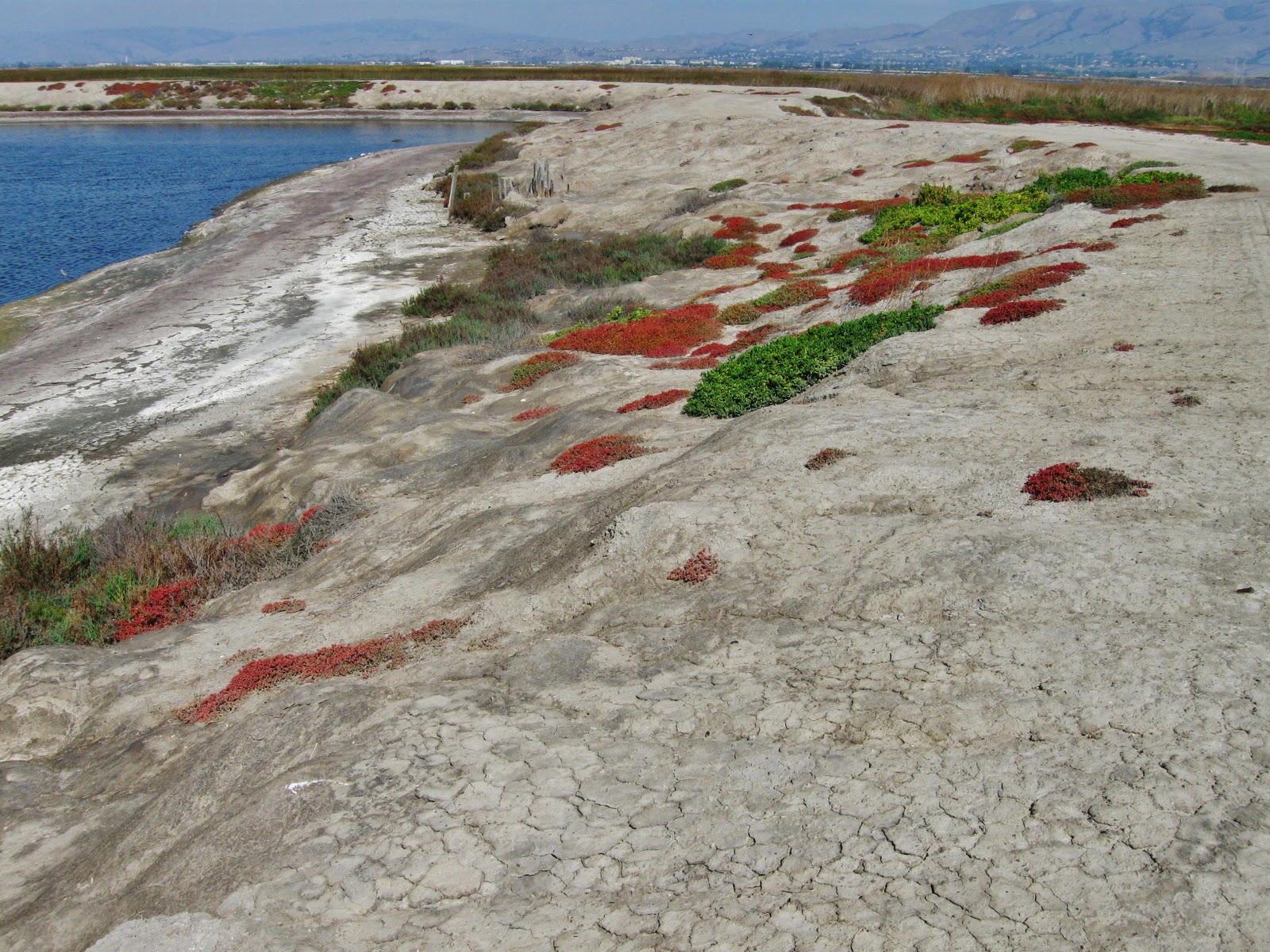
If I told you it was beautiful upon first sight, I’d be lying. The landscape is a flat patchwork of open water, barren soil, and dense tule marshes ringed by industrial development. But if I told you it was unique, there isn’t a doubt in my mind you’d agree. Exiting the highway just east of San Jose, you meander from traffic clogged thoroughfares to the neighborhood streets of the incorporated town of Alviso where houses are built on stilts and one street corner has been designated the community sandbagging lot, a sure sign there must be water somewhere. Finally, you turn onto a poorly paved road that takes off across the scrub land as if intending to lead you on a wild goose chase. But just at the edge of the open expanse of the South Bay you come to it – Don Edwards National Wildlife Refuge, the nation’s first federally protected urban refuge for wetland plants and animals.

The wooden headquarters building has the feel of a well fortified tree house with its massive dark beams and narrow spiraling staircase leading up level by shrinking level to a tiny lookout at the very top with windows on three sides. From this vantage point, you can see the refuge, surrounding urban landscape and indeed the entire Bay Area stretched out before you. Coming and going across the sky are dozens of birds in all shapes and sizes. More flocks are scattered across the salty ground and in the large shallow pools. Their mere presence invites you down from the tower to come out and take a closer look.

This habitat has been drastically altered by human beings for over a century through building levees for flood control and the conversion of marshland into salt ponds used to harvest the culinary staple. The newly restored one hundred acre LaRiviere Marsh behind the visitor center shows the next phase of human impact on the landscape here. A wooden boardwalk snakes from the visitor center out into the wetland where sinuous creeks trace through the undulating mounds of silt and picklweed. Northern shovelers float peacefully among the reeds while sandpipers flit across the muddy banks chasing insects. This land was regraded to mimic the original topography and the levee was breached to reintroduce tidal flows from the bay. All that remains to be done now is observe and learn as the bay does its work.

Out beyond this quaint habitat lie miles of austere salt ponds waiting their turn for rebirth. Berms of dredged earth between the ponds allow safe passage across the divided landscape. Adding to the surreality of the whole scene is the fact that an Amtrak line passes right through the middle of the refuge. Because of the flat topography, you don’t even become aware of this fact until you happen upon the tracks or see a train jetting by in the distance. This refuge is in the early stages of undergoing a 16,000 acre restoration, one of the largest and most ambitious to ever be undertaken. A delicate balancing act is required during this process, because while the historic marshes were beneficial for certain species, the current “unnatural” landscape is a boon to others. Natural shallow open water harbors used to exist elsewhere in the bay area to provide a refuge for shorebirds during coastal storms, but now only the salt ponds provide this type of habitat. Some ponds need to remain filled with water in order to ensure that this much needed safe haven continues to exist.

Don Edwards National Wildlife Refuge challenges the idea of what is beautiful, natural and best for all species. Is a natural place more or less beautiful because it exists in tandem with an urban environment? If an artificially created landscape provides a safe port in the storm for wildlife, does that now make it natural? If the train bisecting the refuge allows people to reduce their carbon footprint by using public transport, is it indirectly best for the refuge to keep it running? Perhaps what is most unique about this place is its ability to challenge our perceptions, help us clarify what we value, and guide how we go forward from a century of human-centered progress into an era of development in partnership with the natural world.