Showing posts with label National Parks. Show all posts

Tuesday, October 2, 2012

Morning Miracles

At some point in the middle of the night, I remember waking up in the tent with the scent of smoke filling my senses. Given the recent drought conditions, I momentarily worried that we had not doused our campfire thoroughly enough before going to bed, but I quickly realized that I had no immediate need for concern. Campfire smoke has an acrid, almost sour smell that lingers for days in hair and on clothing, eventually fading to a stale memory, but distant wildfire smoke is different. It is sweetly spiced and clings not to objects, but to the air itself enveloping everything in an invisible blanket of warmth that gets heavier and more stifling with proximity. Even from afar, its presence is overbearing on a hot, dry midsummer day, but in the slightly humid, chilled air of this autumn night the sensation was pleasant, if slightly unsettling. Though no immediate threat to me, I knew there was a fire burning to the south just over a ridge from the town of the Jackson, and that friends faced the possibility of evacuation. I lifted a few thoughts of uncertain hope up to the heavens for them and the town as I closed my eyes and fell back asleep.

Some hours later I woke up just after sunrise. I gathered my down jacket and gloves, unzipped the tent and slipped out into the quiet cold. Perched on a large rock at the edge of Leigh Lake, I observed the stillness all around me. Looking to the east, I saw a hovering wall of mist rise to blur with the smoky air aloft. The veiled sun reflected on the rippled surface of the water filling the air with a lavender gray light. Male elk bugled from distant valley meadows, their piercing screams muted to a high, haunting whistle. I was enchanted, although not unexpectedly. Such morning miracles are not uncommon in this special place.


A few hours passed with the usual tasks of breakfast and breaking camp, but even at ten o’clock when we were ready to leave, the stillness had not lifted. Without even a hint of breeze, a thick layer of cold, smoky air remained undisturbed across the obscured horizon and the lake reflected a perfect image of the surrounding trees and mountains. We slipped our canoes into the water and floated across the simulated sky. Gliding with effortless strokes, I watched as concentric rings rippled out from each droplet that trickled off the tip of my raised paddle. I heard a gentle shush as the hull split the surface of the water into two rivulets which then snaked along the side of the canoe before smoothing back into the water. It surprised me to realize this was another kind of miracle, to be suspended safely above the fathomless depths by a thin piece of concave plastic.


On and on we paddled that morning away from the peninsula where we had camped, around the shallow fringes of Mystic Isle and over to the inlet at the base of Mount Moran. I meditated on the pull of the paddle against the water, the cold air that filled my lungs and the refraction of light off the surrounding rippled sea of glass. Eventually a gentle breeze did begin to stir, breaking up the stratified air. Warmth crept back into the world and the haze slowly lifted. As the mountains regained their clarity, I shed layers until my skin felt the light of the sun. The peaceful spell was finally broken as our canoes scraped against the rocky lake shore at the portage site, but I was not sad to let it go. Even then, I knew that I would remember this experience not as a dream, but as the best kind of reality – one that I could have never imagined for myself had it not actually happened.


Wednesday, August 1, 2012

For the Birds


Puffy fair weather cumulus clouds dot the western sky as a glow of morning light spreads across the golden green meadow. The air feels cool and humid on the shady trail, but it is tinged with pronounced mugginess in the patches of sunlight - a sign that it will be another hot July day here in the Sierra Nevada. Hodgdon Meadow snakes along Old Big Oak Flat Road at around 5,000 feet above sea level, just inside the western boundary of Yosemite National Park. Ringed by stately evergreens and filled with waist high sedges and dense willow thickets, it is a haven for wildlife. Of particular interest this morning are the small winged aviators now gliding swiftly overhead and across the meadow in search of food and shelter. They fill the air with a cacophony of sounds - an undercurrent of warbles and chirps, overlaid by the melodious trill of a Pacific wren, and occasional punctuations of the Olive-sided flycatcher, “Quick, three beers!”. I’ve been invited by Sarah, a park biologist, to join her curious, energetic daughter, and a local volunteer from the neighboring community of Groveland for a site visit to a park project funded by a grant from Yosemite Conservancy. We are heading out to one of seven banding station where we will observe field technicians as they catch songbirds.


This delicate, diverse avian family has been known throughout history for its complex, inspiring vocalizations. In recent decades, however, songbirds have also gained recognition for their sensitivity to habitat loss. Significant declines in a variety of species have been documented, prompting scientists to take action. The Institute for Bird Populations (IBP) was established in 1989 to coordinate 500 banding stations to research and share information regarding the population and distribution of birds across the continent. This crucial long-term dataset looks not only at individual variables, but also the cause and effect relationship between them, making it a very power tool for scientific research.


When we arrive at the station, no one is around. A small black table is blanketed with papers, tools and writing utensils. Clothes-pinned to the length of one side of the table are small dangling cloth sacks. Some of the bags twitch sporadically, belying the contents inside. As the technicians make their rounds every forty minutes between seven different nets, they collect the birds that have become ensnared. A half dozen or more may be gathered during this time, so the cloth bags allow the birds to be safely transported and kept in waiting, until their turn to be examined. This state of suspension doesn’t seem to cause the birds too much alarm. Even after they are extracted from the bag, most are fairly calm as long as their wings are kept pinned to their sides. One exception are the Northern flickers, who vocalize a continuous stream of car alarm-like shouts while being handled.


Measure wing length, puff of air to the chest to check for body fat or a brood patch, puff of air to the skull to determine age based on the pattern of bumps that emerge as the cranium matures, spread the wings to look at feather condition, tip the bird upside down into a cylinder to keep it still while being weighed, all the while scribbling numbers and codes onto a data sheet. For all but the hummingbirds, look for a numbered band and if none is found, secure one to encircle the leg like a bracelet. After weeks in the field, this team works like a well-oiled machine. Questions and uncertainties are discussed and negotiated with the help of various manuals passed back and forth across the table. The slightest suggestion of curiosity by visitors is met with an assured, demonstrative response. It was explained to me by one of the technicians that each primary feather is assigned a number. Because juveniles and females are so similar in appearance, sometimes the only way to determine the exact species is by noting the difference in length between two particular feathers. I marvel at their capacity for attention to such nuances.  Sarah is clearly proud of the work they’ve been doing, and already wistful about losing her team lead, who was recently offered a position by the IBP to be a regional coordinator for independent field research teams.


The birds are examined with deft efficiency, and then carefully set free. After being restrained, some seem to forget that they know how to fly, and so they hold still for a moment suspended in time. At this point in the process, visitors are encouraged to participate. I am offered the opportunity to release an Anna’s Hummingbird, and suddenly a breath of feathers is slipped into my hand. I’m hardly aware of its physical presence, except for the warmth that concentrates and spreads across my open palm underneath its fragile body. I am coached to gently rock it back and forth onto its stomach, and with a few shallow bobs of my palm the sprightly bird elevates up into the air. The flash of movement and sudden pulse of wing beats against my hand cause me to gasp. I remember in that moment that it is possible to hear your soul shout for joy. I glance at my instructor and I see it in her eyes too – the childlike wonder of the moment when this wisp of bone, muscle and feathers manifests into pure grace. How privileged we are to be surrounded by such every day miracles.


Sunday, March 25, 2012

On the Move Again


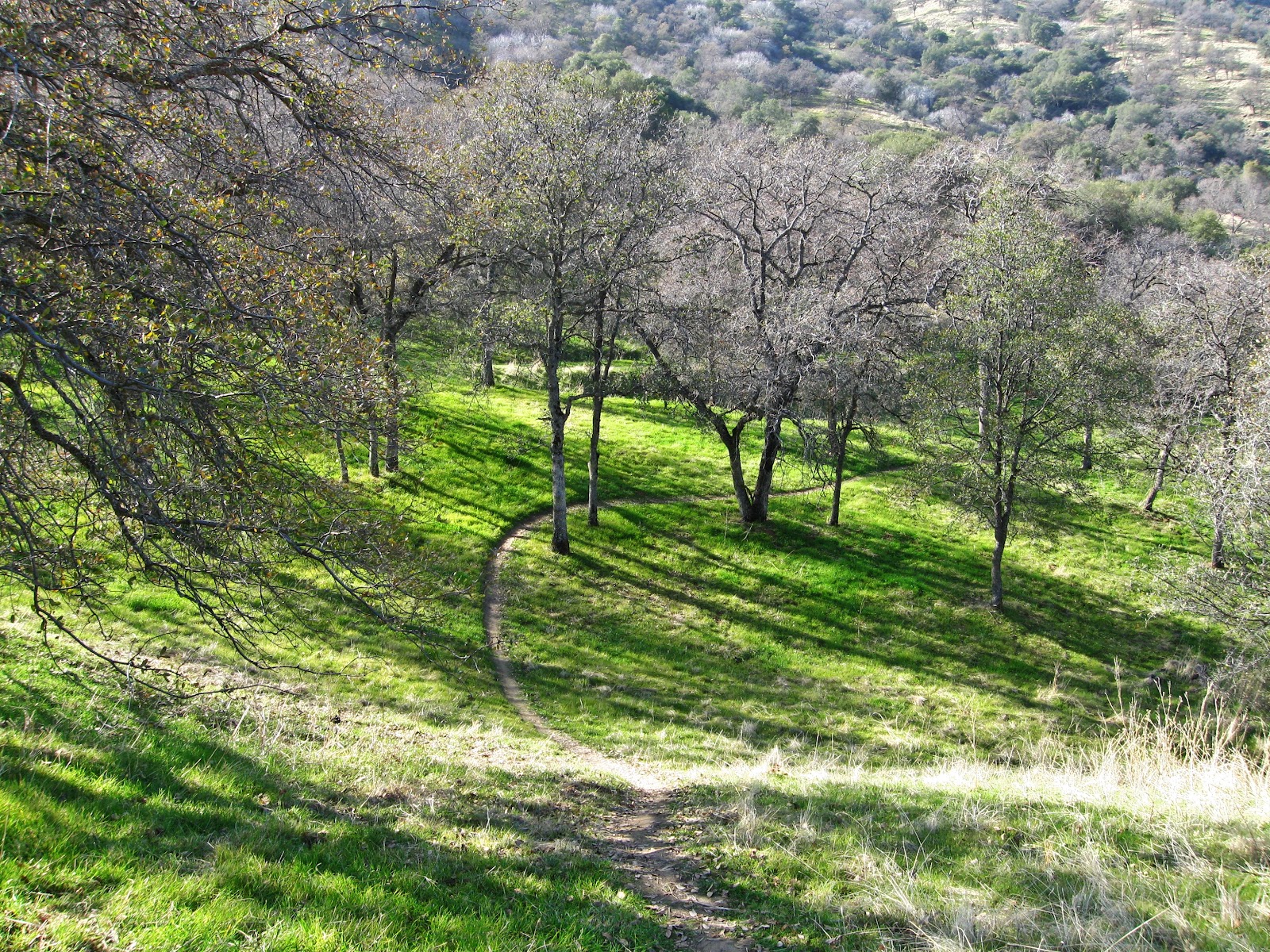
View from the Skyline Trail in Three Rivers, California
Packing and moving have been a regular part of my life since I moved out west over ten years ago. Every few years possessions get put into boxes and carted off to the next destination, with the excitement of new adventures usually outweighing any other concerns. This time, however, we took a leap of faith when we landed in the little town of Three Rivers almost two years ago. Though it went against my better judgement to leave my job and sell our house in New Mexico, after briefly visiting the town one weekend the decision to move ultimately felt like the right one. And since sentiment seems to regularly trump reason in my life, I jumped. Over time we’ve come to know this place and many of the people who live here, and while we see that it's perfect for some, it does not fit us. Many residents of Three Rivers like their little corner of the world to be quiet and separate. It’s a place to rest and retreat from the hectic pace of life in Southern California and to escape the often drab polluted skies of the Central Valley. Those who stay – outdoor enthusiasts, artists and craftspeople, ranchers and farmers, families and retirees – sing the praises of this community for these virtues. 

I’m certainly glad to have spent time here in this place, but I’ve been wanting something more. More of exactly what has been a little hard to define. Perhaps more opportunities – I’m still trying to figure out what I want to be when I grow up. More community would be nice too. Rest and retreat are fine every now and then, but a thriving downtown where people regularly go to experience a shared life is something I look forward to having again. A chance to put down roots is also welcome. Until now, our moves have served as stepping stones on an ever changing path as we, both separately and together, attempt to shape our lives. Because this job is an excellent opportunity for Peter to take his career in a new direction, and because there are a myriad of possibilities for me to explore, we’ve placed our bets and purchased a house.

Sierra live oaks
Some things with this move are going to change very little, for which I am grateful. We’ll still be in California, the complicated and beautiful state that has finally become a place I love to call home.  We’ll still be living in the lovely foothills of the Sierra Nevada, this time a little higher up in the chaparral where the graceful Sierra live oak trees grow. We’ll still be only a few hours from family and friends living elsewhere in California, which is like having them as neighbors in such a large western state (frame of reference for those living in the more densely populated eastern half of the country - people living in Hawai’i who found out we were from California called us practically neighbors).

Our house in Mariposa (P. Lindstrom)
I confess that I often have a sense for how things will work out in advance of the unfolding. I knew Peter was going to get his job in Three Rivers before he got the offer. I knew we were supposed to move here, even though it wasn’t a place we were going to stay. It took me a while to figure out why being in Three Rivers was a necessary step, and then the data manager position in Yosemite opened up – the one that Peter said he’d love to eventually have when he first learned a year ago that such a position existed. Eventually turned out to be only a few months later when a retirement made the position available for the first time in over a decade. I knew the weekend that we went up to check out the town of Mariposa after his interview that he was going to get this job. I knew the moment we walked in the door of that little white house that it was meant to be ours. And every time we’ve been back for a visit, I'm thrilled about the idea of living in Mariposa. It wouldn't surprise me if after eleven years, five moves and four different national parks, I just might finally stay put for a while. 

Sunday, July 24, 2011

One Day in Yosemite Valley

The view from above Yosemite Valley as you come out of the Wawona Tunnel is stunning. I mean take your breath away, jaw droppingly stunning. So much so, that all I could do was sit there on the edge of that stone wall and stare at the expanse of trees, shining granite monoliths and ribbon-like waterfalls that appeared before me. It felt like being in a dream, or getting a momentary glimpse of heaven, but each time I blinked it was still there in front my eyes. While it may seem like a dream from a distance, actually being in Yosemite Valley is very much a call to reality. A place this beautiful can’t help but become an international tourist destination, and so it has precariously taken on that role with a mix of grace and strain.

Yosemite Valley is a treat for all the senses. Verdant green meadows carpet the valley floor, making the contrast between the vivid blue sky and stark white granite domes all the more brilliant. Prior to park service development, the leisurely Merced River flowed freely and replenished the lush meadows by occasionally flooding. To reduce the potential for flooding, provide dry ground for camping and decrease mosquito populations, the river was forced into a more predictable pattern of flow and some of the meadows were drained during the first years of park development. Such changes cut off life sustaining water to these valley jewels and in recent decades, attempts have been made to reinstate more natural processes. Meadow drainage tiles have been removed and where possible, the river is being unbound and allowed to flow as it prefers. Boardwalks throughout the valley now intersect this reinvigorated ecosystem, allowing visitors to wander through the sea of green and more closely observe the scattered wildflowers, wetland birds and grazing mammals that live there.

Waterfalls in the springtime roar inescapably throughout the valley, booming and reverberating off the surrounding stone walls, making the undulating white columns of water in the distance all the more palpable. Humid sprays of water amplify the smell of the trees and soil near the falls, giving the air a saturated, fresh smell. Thousands of people wander around the Yosemite Falls area with their eyes cast upward in awe, speaking dozens of different languages, gesturing animatedly as they interpret the maps and educational displays that explain the beauty before them. The trail system around the falls recently underwent a major renovation to allow for better flow of visitors and reduce soil erosion resulting from overuse. The wide, paved trails now allow those visitors, both young and old, with less physical mobility to more safely enjoy the forested, boulder strewn landscape, and inspiring vistas.

By afternoon, the initial rush of excitement has mellowed and if you give into it, a growing sense of peaceful wonder will descend upon you. Sunshine washes warmth over every surface, while the cooling alpine breeze chases away discomfort. On the back porch of the historic Ahwahnee Hotel guests and passersby relax, while soaking up the ambiance and grandeur of the park reflected through the structure’s immense stone walls. Providing an interesting juxtaposition between refined civility and the wildness that surrounds it, the hotel was built in 1926 to attract wealthy patrons seeking relaxation and restoration. During WWII park tourist visitation decreased dramatically, but war weary soldiers found still found refuge at the Ahwahnee, which was converted for use as a military retreat. The architects took their design inspiration from the landscape and used locally sourced materials to increase the sense that this place is a part of, rather than an escape from, the natural wonders of valley.

Pensive photographers of all ages raise their cameras to frame shots, while plein air painters place their brushes with care in an attempt to capture a moment that will remind them when they return home, that this surreal place really does exist. Rock climbers laden with coils of rope, their steps accented by the clink of hardware on their belt, scramble over boulder piles leading to the base of El Capitan, Half Dome and dozens of other lesser known climbing walls for the thrill of merging with the geologic wonders of the valley. Thousands of cars squeeze into every available parking space, and in the afternoon fellow tourists on foot and bicycle shake their heads in amazement at the bumper to bumper traffic snaking slowly back home during the afternoon rush hour. If you are looking for solitude, this is not the place for you. If you want to see nature untouched by significant human development, there are plenty of other places in the Sierra Nevada to visit. But if you are looking for natural beauty of the kind rarely seen with such ease, and the communal experience of marveling at that beauty with so many other people from across the country and around the globe, then Yosemite Valley is a place you should experience for yourself.

Wednesday, April 27, 2011

A Day in the Life of a Physical Science Technician

Those of you who have known me for a while, are probably aware that I've had a number of different careers in my life up to this point. High school science teacher, special education teaching assistant, non-profit administrative assistant and program manager, community college counselor and program director. Upon moving to Three Rivers, the parade of jobs was sure to continue and everyone, myself included, was pretty curious to know what I would do next for a living.

I started off working as a biological science technician, running around off trail in the forest helping to collect plant and tree data for the park Fire Ecology program. Little did I know that waiting in the wings was an opportunity to finally use my Bachelor's degree in Meteorology, which I earned thirteen (!) years ago and considered only as a brief step on the path toward my Masters in Education.

I am now officially a Physical Science Technician at Sequoia and Kings Canyon National Park. Sounds like a pretty interesting job, doesn't it? But what does it actually mean? I've gotten that question a fair bit and the short answer is that I now run around the park collecting air, weather and precipitation data for the Air Resources program. The long answer is a bit more or less interesting, depending on how much of a nerd you are.

I mentioned in my very first blog post that Seqouia and Kings Canyon National Parks have some of the worst air quality in the nation, because of their location just east of the San Joaquin Valley, which traps pollution from agricultural practices as well as car exhaust from the Bay Area and the valley. It's a bad combination that leads to significant ozone and particulate matter accumulating in the air. Both are health hazards and obscure visibility by filling the air with a brownish gray haze. I suppose I could now also look at them as a form of job security.

The park has two air monitoring sites - one down near the headquarters at Ash Mountain (elev 1,000 ft) and another up in the Giant Forest (elev 7,500 ft). The Ash Mountain site focuses primarily on monitoring ozone and particulate matter (tiny little specks 2.5-10 microns in diameter that get into your lungs with unpleasant health impacts). Numerous pieces of equipment with different types of filters are running twenty-four hours a day, all year long analyzing the air for ozone, ammonia, particulate matter and other hazardous gases and pollutants. The Giant Forest site looks much more at pollution in the precipitation that falls as rain or snow at elevation. The precipitation samples collected are primarily analyzed for the various components of acid rain, mercury, and now because of the nuclear situation in Japan, radiation.

By far, the best part of my job has been snowshoeing the quarter mile into the Giant Forest site every Tuesday. Sites need to be located in a place where trees don't interfere with the collectors, so in the Giant Forest that meant finding a patch of relatively level ground on the edge of the mountain. I would be quite content doing the most boring job in the world (for a while, anyway), as long as I had this view and got to take this walk through the trees once a week.


View of the valley from the Giant Forest site


Sunlight through the clouds


The day after a snowstorm

Thankfully, this job happens to also involve doing a lot of really interesting things. Collecting precipitation requires a fair amount of vigilance and precision to avoid contaminating the sample. Gathering the data and keeping all the equipment running involves knowing a little about a lot - technology, electronics, basic home repair, common sense, and communication skills, because if anything (including the building that houses all the electronics) breaks it's up to us technicians to fix it with phone support from the various research labs around the country who receive and analyze our data and samples. This week for example, I learned how to replace the diaphragm on an ozone analyzer.


Electronics equipment inside the shelter


Belfort rain gauge (I'll be sad to see this relic go!)


Me cleaning the Mercury Deposition Network precipitation collector

In addition to working for Air Resources, I have also assisted with a database management project for the Environmental Compliance division and the research permit database for the Resource Division. Even the office jobs in the National Park Service are pretty darn interesting. All those years ago at Purdue, I would have never believed that one day I'd be using my degree in this way. It just goes to show that you never know where life is going to take you, but if you're open to the possibilities all kinds of adventures are waiting!

Tuesday, March 22, 2011

Death Valley Adventures

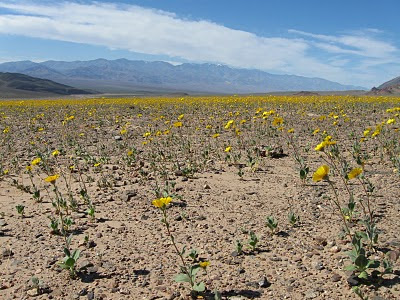
Coming down out of the mountains into Death Valley on Hwy 178, the wide expanse of white salt flats reflect blindingly in the sunshine. Spring wildflowers line the roadsides and fields of flowers light up the seemingly lifeless rocky ground. Telescope Peak towers more than 12,000 feet above Badwater Basin, the lowest point in North America. Massive inclined plains of jumbled rock fan out at the mouth of each canyon. Everything seems larger than life and then you get out of the car to take a photo and have to catch yourself before you step on a delicate stem of wildflowers. You quickly get the feeling you could spend a lifetime in this extraordinary place and still never fully know it.

Precious water flows up from the ground and breathes life into this arid desert at Salt Creek. The endangered Death Valley Pupfish have adapted over the last 10,000 years to tolerate an ever dwindling body of water which is two to three times saltier than the ocean. The fish burrow into the mud and hibernate through the cold winter, breed in the early spring and then attempt to survive through the summer and fall as evaporating creek pools grow smaller and more saline. Most don't survive. That any of them could in a place where water temperatures regularly reach 112 degrees in the summer is a testament to the persistence of life.

For all its harsh extremes, the valley became a haven from city life for a Chicago couple named Albert and Bessilyn Johnson. Albert came to know and love the desert through his adventurous camping trips with an eccentric local character named Death Valley Scotty. His wife, on the other hand, wanted a much more civilized desert experience, so in 1922 they began building their dream vacation home in the style of an ancient Spanish castle. The extravagant refuge took more than ten years to build and spared no expense with the finest handcrafted construction.

In spite of her desire for opulence and comfort, Bessilyn fell in love with the simplicity of the desert once writing that, "Something about the clear desert atmosphere seems to make the moonlight brighter than anywhere else in the world, and to glorify it. And the great mountains rise in the splendor of it all. Moonlight in the Desert! You may have cities and electric lights, movies, dancing parties, and surging crowds; but for a thrill, an emotion, a sense of peace, and a confidence in a God who cares, give me moonlight in the Desert."

I may never feel a strong pull to return to Death Valley, but I can understand why some people do again and again, as each of us know the places that speak to our heart. What I will always remember are the surreal moments of beauty that you can only find in that valley. Experiencing complete silence in the middle of the white salt flats while watching the clouds and mountains turn pink at sunrise, seeing the unearthly topography of Devil's Golf Course stretching out to the horizon, and sleeping outside under a near full moon in the sand dunes on my birthday, feeling that same sense of peace that Bessilyn Johnson described.

Here are a few other photographic memories from our trip:


Sunrise at Mesquite Flats sand dunes

Stovepipe Wells campground by moonlight

Devil's Golf Course

Desert gold off Hwy 178 in mid-March

Monday, February 14, 2011

Marble Falls Early Spring Hike

Early spring has arrived in the foothills! The daffodils are up, all the California buckeye have leafed out, and the other trees and shrubs are in various stages of bud and bloom. Even though it never gets cold enough here for me to have any real complaints, it hasn't actually felt like spring until this past weekend. A dry cold front moved through earlier in the week, sweeping the stagnant haze out of the valley and temperatures finally cracked the 70 degree mark, making it a warm and blissfully clear Saturday to go for a hike.

The last time we hiked Marble Falls was in June - the very first hike we went on after moving here. I was curious to see how different the trail would look in the very early stages of spring. There are no wildflowers in bloom yet, but still a variety of interesting signs of plant life to be seen.


The trail switchbacks up the side of the mountain, following the stream-eroded topography, which means you weave in and out of exposed, hot dry chaparral and cool, damp green canyons. There are so many contrasts between these two habitats, which exist side-by-side: hot and cool, dry and damp, bare rock and moss, dust and streams.


Once you get higher up the mountain, you round a corner and finally see the entrance to the deepest part of Marble Canyon. The size, number and variety of trees increases with the cooler temperatures and greater moisture at higher elevation. The angle of the mountainside causes many of the trees to arch with the pull of gravity as they reach for sunlight. California bay laurel trees also become more plentiful and their leaves and flowers fill the air with a fresh sweet smell that makes you wish you could bottle up to take with you after you leave. The sound of the falls grows louder as you get closer. As my husband commented, hiking this trail really is an experience that makes all your senses ridiculously happy.


By the time you reach the falls you are walking on a floor of undulating gray and white banded marble, resulting from metamorphosed limestone during the formation of the mountains, and smoothed by countless years of flowing water. The contrast between the white rock and the shadow cast by the canyon wall is so great that it's difficult to take good pictures of the falls themselves. That being said, it's still a great place to take interesting pictures, and especially to sit and enjoy the powerful rush of water.


We hope to hike this trail again sometime in April to see how it evolves as spring continues. I'll be sure to post pictures of that hike so you can see the changes! If you'd like to see more pictures from this hike, you can view them here.

Since my last post, I've started working for the park as a Physical Science Technician doing data collection and instrument maintenance for the Air Resources program at the park. Once I take a few more photos, I'll be sure to post about that experience in more detail. I also owe you two more posts on our vacation to Hawai'i, which I'm sure I'll be happy to revisit as the rain and cold return to Three Rivers this week.